

When she plays hopscotch outside the house, she likes all her five-year-old friends to be with her. She also wants her grandmother to sit across the road. Just sit, doing nothing. Nothing but watching her. Nothing but sitting and looking at her from time to time. That is what she wants. This is one of her favorite games because it gives her a chance to reunite with her four age-fellows, companions who have been friends and playing this game since they were toddlers, less than two years old. It was the intoxicating sensation of being suspended in mid-air, the fleeting moment when their feet didn’t touch the ground, that made them feel like they were flying for the briefest, tiniest second. Afterward, they would just dissolve into laughter. Perhaps they didn’t play it for the rules of the game itself, but purely for the sake of flying. And so, that is how they spent every morning, the little girl hopping around with her fellow five-year-olds.
That was how the morning bled into the afternoon in those streets, with her leaping through the chalked squares and her grandmother sitting just a few steps away on her chair, occupying herself with her own quiet rituals. She would be knitting a sweater, reading the newspaper, or, failing all else, just sipping tea. After all, something is needed to tell the mind that it is up to something, and that something will, in time, bring something worth living for.
Every now and then, the grandmother would look up and smile at her granddaughter. The child, in return, would flash back a bigger smile, often with a wave of the hand. The grandmother would watch her for a few quiet seconds, trying to take in the fullness of it all. She would see her pick up a piece of chalk and draw boxes on the rough asphalt, each straight line meeting another until four of them made a box, and all of them together made the hopscotch. Then the girl would jump in, one foot lifted, one foot landing, trying to keep her balance, making sure the raised foot never touched the ground or the game would be over. A few steps ahead, she would get the brief respite of placing both feet down, letting the body release its held tension. But only for a moment, because after that, she would have to lift again, hang in the air again, stay inside the box again, making sure not to even graze the boundary. Or it would all be over.
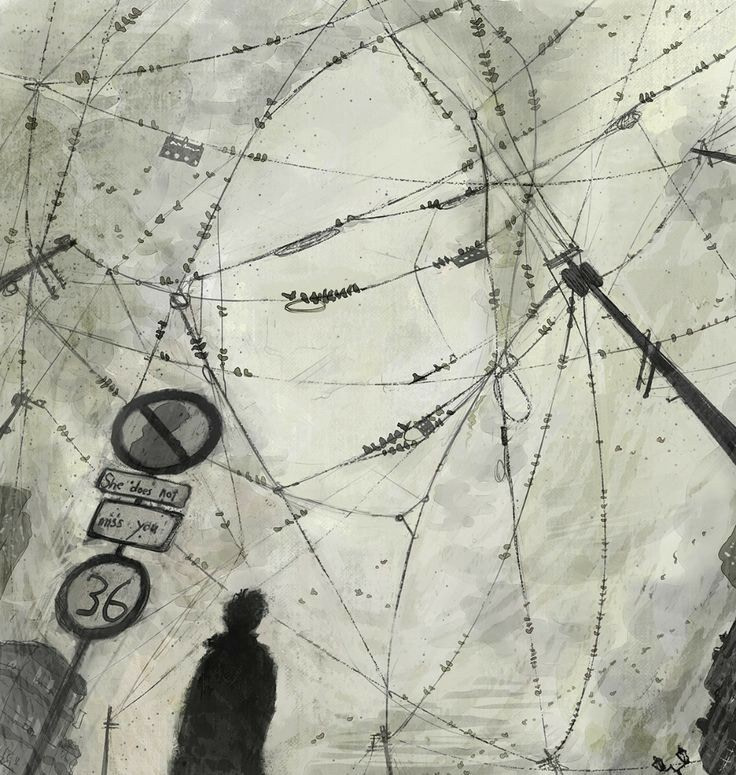
Every morning, before coming out to set her chair, the grandmother would hear the clash of dishes from the open kitchen window of the neighboring house. That same sound, every day, and now she could even tell the difference between the teapot and the cups just from the noise. She sees that woman daily. Or perhaps a more honest way of saying it is: she now feels that woman daily. This is the hour when all the children have left for school, when the husband has left for work, and the woman is home. A home must have a desperate, consuming love for a woman, it never lets her leave. She has to stay inside it. Sometimes it looks like a one-sided relationship, not because the love has faded on the other side, but because expectations have quietly corroded all the walls.
Standing in the epicenter of the four walls of her kitchen, the woman of the house could be seen. Once in a while she would set a cup down in the sink and drift somewhere deep into her own mind. She would look outside, searching for something she herself cannot name, only carrying the feeling that something was supposed to arrive at some point in time, and that it is late now. The chain of thought breaks with the sudden worry that she may have left the fan on in the living room. Suddenly, her chain of thoughts would snap with the anxious realization that she might have left the living room fan running. She would hurry to the living room, only to find the fan already switched off. Shaking her head, she would pick up a single lonely glass left on the table, carry it back to the sink, and realize she was late. She always had to hurry. Hurry to wake up for the day, boil the milk, pack the lunchbox for her son, prepare breakfast for both her husband and child, rouse them both from sleep, hand them their crisply ironed clothes, polished shoes, folded ties, and paired socks. She served them breakfast, meticulously ensuring that her son’s milk was mildly cooled, while her husband’s tea remained stirringly hot. Only after sending them off on their respective ways would she return to her designated spot of contemplation in the kitchen: the sink.
It was from this vantage point that the grandmother observed her. She almost always found the lady in the exact same state of exhaustion, wearing the same vacant expression. Right at that hour, a young woman from the house across the street would step outside, cradling a newborn baby wrapped snugly in a blanket. She brought him out daily so that both mother and child could absorb the beneficial vitamins of the morning sun. Sitting right beside her was her mother-in-law, performing all the customary duties of her rank, dictating terms to the young mother while shelling peanuts on a crisp winter morning. She would instruct her endlessly on how to correctly swaddle the infant, how much sunlight was therapeutic, and exactly when it became harmful. The daughter-in-law tried to memorize every syllable, knowing that the slightest slip of memory would invite sharp recrimination.

This daughter-in-law was freshly initiated into her role, a newly graduated woman. It was deemed her ‘good fortune’ that she gained early entry into this family through the bonds of holy matrimony, and a greater fortune still that she bore a child so early in life. Now, supposedly, she possessed all the pre-requisites required to feel fulfilled. The baby was the ultimate testification of her worth as a daughter-in-law in this household, a permanent anchor for her role moving forward. Before this, she was merely a bride, clad in the expensive silks that the family’s business provided, looking exactly like the ornamental, heavily dressed girl that the watchful, demanding eyes of society expected to see. But now, she is a woman who has had a child. A woman, tethered to an infant, carrying him everywhere as if he were an extra organ attached to her own body, monopolizing her arms, her routine, and her very identity. Her day began when the baby woke, and vanished when the baby slept. She stepped outside only to sun her child. She paced the pavement only when his cries grew too loud to suppress inside. She dressed the newborn in fine clothes because he, too, had to serve as a pristine representative of this family to the world. She was already grooming him to regulate and uphold the rigid structures that had been established long before him. And so, every morning, you would see this pair of women sitting outside, sitting outside together, each faithfully performing the role that has been written for them long before they arrived.
During one of these intense, critical family lectures, a laborer would pass by on his bicycle, a heavy bag of cement lashed to the backseat, entering the under-construction house nearby. He moved with an automated certainty, a routine to which he had become so accustomed that he could navigate it with his eyes closed. He knew exactly where to park his bicycle, how many paces to take to reach the threshold, where the timber lay, and how many pulls it took to sputter his cement-mixing machine to life. He knew precisely which brick they had left off on the previous evening and where to resume today. He began his work, calculating instinctively how much mortar to spread atop each brick, stacking them into seamless rows. He labored on, carving the wooden frames for the doors, setting the rhythm for his day.

The house he was building was destined for a couple who would settle there the moment the dust cleared. A husband, a wife, and their two sons. The husband had been transferred to this city and allocated this plot. His wife had been waiting for seven agonizing years in a separate city, living apart from her partner, praying for the day he would finally secure a place where they could coexist as a family. Now, after seven total years of patience, endurance, and fraying faith, it was finally happening. She genuinely believed that her deep-seated worries would evaporate, that the miseries of her long separation would cease to pursue her once she crossed that threshold. That was her hope. She had begged her husband to build a sanctuary where they could live comfortably together. She hadn’t been allowed to see the location, nor had she been given a voice in the architecture or the interior design. But perhaps that didn’t matter to her. She simply craved those four boundaries to call her own, a space that had been the ultimate dream of her life, a sanctuary she had romanticized through countless lonely nights.
Thus, the carpenter labored on the foundations of someone else’s desperate hopes, sacrificed prayers, translucent, endless nights, and agonizing moments of waiting. Though the skeletal structure of the house was complete, it was only the cosmetic finishings, the paint on the walls, and the wood fitting on the doors that remained. The carpenter had no idea that a woman sitting 100 kilometers away was fervently praying for his saw to move faster, desperate to occupy the house at the earliest opportunity, hoping to finally taste the life she had so vividly envisioned.
On this particular morning, the five-year-old girl stepped out of her house once again, eagerly waiting for her comrades to join her. She set up her play area. The chairs were arranged; her grandmother had taken her place first. The grandmother watched the young girl trace those rigid chalk boundaries on the asphalt. Soon, three of her playmates arrived, and they all huddled together, waiting for the final member of their group to appear.
The grandmother looked around. She saw the woman at the kitchen window, still waiting, trapped at the sink. She saw the young mother in the neighborhood garden, still nodding submissively to her mother-in-law. Across the way, the carpenter appeared, falling into his mechanical rhythm, cutting wood and stacking bricks to ensure the upcoming family would have a flawless prison. The grandmother took a slow sip of her tea, set her newspaper aside, and focused her gaze entirely on her granddaughter. The little girl was now sitting on the threshold, her small hands propped under her chin, surrounded by her three remaining friends.
One of the children says what she had already said yesterday: their fifth companion wouldn’t be joining them today, nor ever again. She had been declared a grown up; she was no longer permitted to be hopping around in the dusty streets.

The granddaughter was not ready to let go. She sat there staring at the road, hoping against hope that her friend would defy the rules, that they would become a complete circle of five once more, flying for that tiny second just as they had done when they were even smaller than five. She had her whole environment perfectly arranged, her chalk drawings were fresh, her grandmother was in her chair, and yet, she was stranded in a painful wait.
The grandmother watched her. For a long moment, she was lost in her own history, desperately searching for a combination of words that could console the girl without lying to her. For a terrifying second, she found nothing. She gently placed her teacup on the table, leaned back, and then stood up slowly. She smoothed her clothes, adjusted her posture, and surveyed the street one last time.
The woman at the kitchen sink had finally washed all her dishes. The neighborhood daughter-in-law was dutifully feeding the baby, while the mother-in-law coldly reminded her that the infant needed a bath today. The carpenter was still consumed by his work, while somewhere miles away, a lonely wife stared into the distance, her heart tied to the speed of that carpenter’s saw.
The grandmother took in this entire landscape of the walls all around, then walked slowly toward her granddaughter.
The little girl looked up, her eyes wide with a heavy, unchildish sorrow, asking her if she would truly never be able to play hopscotch from now on.
The grandmother looked down at her, her expression radiating a profound, serene peace, and smiled gently. She kneeled beside her and told her that this was her world, her game, and her dream. She told her that she could play for as long as she wanted, that she could make as many friends as her heart desired, and that she could rewrite every single rule of this game.

Taking the girl’s small hands, the grandmother told her that she wanted her to play games where there were no boundaries at all. She urged her to draw her lines so far apart that they could never enclose her, that she would her to never let anything encapsulate her in a box.
The grandmother’s voice softened, carrying the weight of a lifetime of quiet rebellion as she explained that perhaps those who came before had allowed themselves to be caged in ways they never wanted for her. But she told her that every single box she herself had ever been forced into, she had broken apart so that her granddaughter could finally be free. She told her that the women who walked before her had torn down those walls, and now, it was her turn. She did not need to worry about their boundaries anymore.
She told her she just needed to fly.
And that she should fly.


